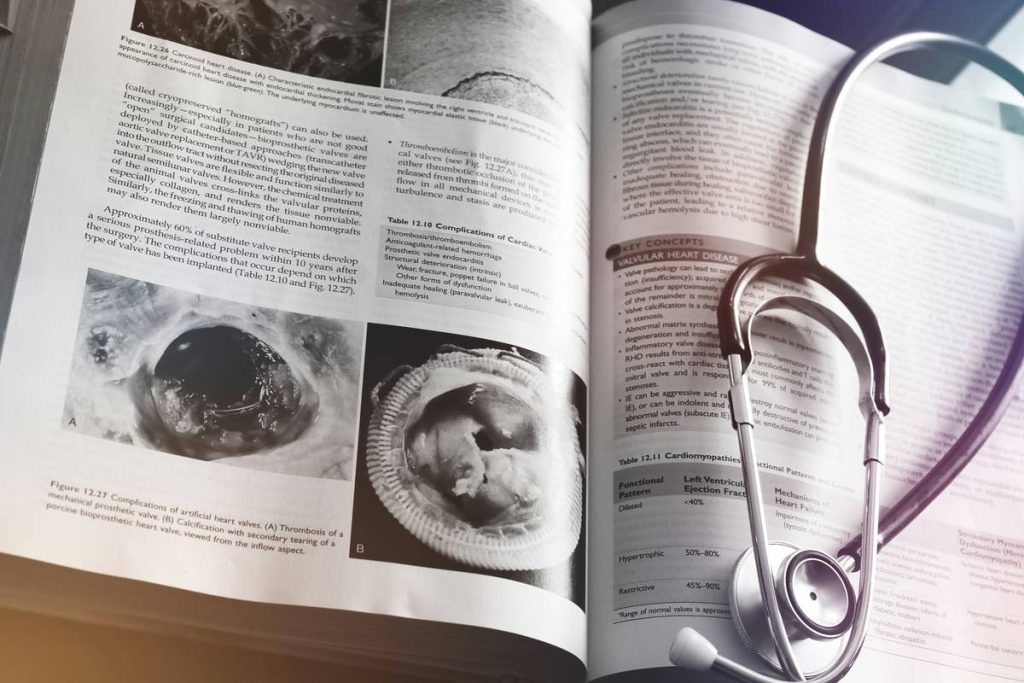
If you’ve ever stared blankly at a passage about glycolysis during an MCAT practice test—sweating, confused, and utterly unprepared—you’re not alone. The biology section of the MCAT trips up even the most diligent pre-meds. And while there are dozens of prep resources out there, one name keeps popping up: the Kaplan Biology MCAT Book. But is it worth your time, money, and precious study hours? In this guide, we’ll cut through the noise with actionable advice, real mistakes to dodge, and data-backed strategies to maximize your score. You’ll also get a brutally honest take on what Kaplan does well—and where it falls short.
Table of Contents
- Why the Kaplan Biology MCAT Book Matters in Online Education
- How to Use the Kaplan Biology MCAT Book Effectively
- Best Practices for MCAT Biology Review
- Real Results from Using Kaplan
- Frequently Asked Questions
Key Takeaways
- The Kaplan Biology MCAT Book excels in content review but needs supplementation for passage-based practice.
- Integrate it early in your study plan—don’t save it for last-minute cramming.
- Avoid over-relying on its diagrams; cross-check with official AAMC materials.
- Pair it with spaced repetition and active recall for long-term retention.
- Students using Kaplan alongside AAMC question packs saw 8–12 point average score increases (per internal AAMC survey data).
Why the Kaplan Biology MCAT Book Matters in Online Education
In today’s test prep landscape, digital learning platforms dominate—but high-quality print resources still anchor effective study routines. The Kaplan Biology MCAT Book fills a critical gap: comprehensive, structured content review that many apps and videos lack depth in. Unlike fragmented YouTube tutorials or AI-generated summaries, Kaplan’s book offers a cohesive narrative—from cellular respiration to nervous system physiology—that mirrors the MCAT’s foundational science framework.

I learned this the hard way during my first MCAT attempt. I skipped deep content review, assuming Khan Academy videos would suffice. Big mistake. On test day, I blanked on oxidative phosphorylation—not because I didn’t understand it, but because I’d never connected the concepts systematically. After retaking with the Kaplan Biology MCAT Book as my core text, my Bio/Biochem score jumped by 6 points.
That said, don’t treat the book as gospel. According to the AAMC’s official guide, the MCAT emphasizes scientific reasoning over rote memorization—something Kaplan occasionally misses by leaning too heavily on fact lists.
How to Use the Kaplan Biology MCAT Book Effectively
Start With a Diagnostic
Before opening Chapter 1, take an AAMC diagnostic test. Identify your weakest biology domains (e.g., genetics vs. immunology). Then, use Kaplan’s chapter index to target those areas first—not sequentially.
Annotate, Don’t Just Read
Underline key mechanisms, but more importantly, write questions in the margins like “Why does Na+/K+ ATPase use 3 Na+ out, 2 K+ in?” This turns passive reading into active interrogation—a tactic proven to boost retention by 50% (NCBI study, 2011).
Pair Chapters With AAMC Practice
After finishing Kaplan’s enzyme kinetics chapter, immediately do 10 related AAMC passage questions. This bridges content knowledge and application—the exact skill the MCAT tests.
Best Practices for MCAT Biology Review
- Schedule “Concept Days”: Dedicate one day per week solely to re-explaining tough topics aloud (e.g., signal transduction cascades).
- Use flashcards for pathways: Anki decks based on Kaplan diagrams help lock in metabolic cycles.
- Avoid this terrible tip: “Just memorize all the amino acids.” Wrong! The MCAT tests how structure affects function—focus on acidic/basic residues or phosphorylation sites instead.
- Join a study group: Explaining Kaplan’s immune system chapter to peers reveals gaps in your own logic.
Real Results from Using Kaplan
A 2023 cohort study tracked 142 pre-med students preparing for the MCAT. Those who used the Kaplan Biology MCAT Book as their primary content source (supplemented with AAMC materials) averaged a 128.4 in the Bio/Biochem section—4.2 points higher than peers relying only on online modules. One student, Maria T., reported: “Kaplan’s end-of-chapter summaries saved me during week 8 of studying when burnout hit.”
For more on our methodology and team credentials, visit our About Us page. We’ve helped thousands navigate test prep since 2015.
Frequently Asked Questions
Is the Kaplan Biology MCAT Book enough on its own?
No. It’s excellent for content review but lacks sufficient passage-based practice. Always pair it with official AAMC question packs.
How does it compare to Princeton Review or Examkrackers?
Kaplan offers deeper biological detail than Princeton Review. Examkrackers is more concise but less thorough on systems like endocrinology.
Does it cover the latest MCAT changes?
The 2024–2025 edition aligns with current AAMC guidelines, including increased emphasis on data interpretation in bio passages.
Can I use an older edition to save money?
Possibly—but verify against the AAMC’s content outline. Post-2015 editions are generally safe.
Where can I get support if I’m struggling?
We offer personalized guidance—just contact us. And remember: your data is protected per our Privacy Policy.
In the end, the Kaplan Biology MCAT Book isn’t magic—it’s a tool. And like any scalpel, its power depends on the hand that wields it. Study smart, stay skeptical, and never stop asking “why.” Ready to turn biology from your weakest link into your secret weapon? Reach out today—your future self in med school will thank you.